Oregon legislative agenda & upcoming votes Oregon session calendar
Summary
Creates [<i>statewide emergency preparedness offices and authorities</i>] <b>authority</b> to coordinate emergency management. [<i>Authorizes bonding for public safety projects.</i>] Requires state agencies to designate liaisons for emergency management. Imposes duties on the Oregon Department of Emergency Management related to management of emergency preparedness assets. Modifies the definitions of and grant requirements for Resilience Hubs and Resilience Networks. Authorizes certain training facilities to host overnight training activities. Requires the Oregon Department of Emergency Management to obtain fingerprints of employees and contractors. Authorizes counties to waive certain civil penalties related to food service facilities during emergencies. Requires the Department of the State Fire Marshal to study health coverage for firefighters. [<i>Requires legislative committees to identify a revenue source for certain public safety programs.</i>] Establishes grant programs for emergencies.
- HB 4121 is a bill in the Oregon House, 2026R1 session, introduced February 2, 2026.
- Sponsored by Paul Evans, David Gomberg, Cyrus Javadi, Janeen Sollman, and James Manning Jr., with 11 cosponsors.
- Current status: signed into law.
- Most recent action (April 13, 2026): Chapter 114, (2026 Laws): Effective date January 1, 2027.
- 4 recorded votes; the most recent, on March 6, 2026, passed 26-2.
-
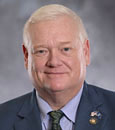
State Representative, District 20
Democratic -

State Representative, District 10
Democratic -

State Representative, District 32
Democratic -

State Senator, District 15
Democratic -

State Senator, District 7
Democratic
Contact your legislator about this bill
Bill text & documents
- A-Engrossed (opens in a new tab)
- B-Engrossed (opens in a new tab)
- Enrolled (opens in a new tab)
- House Amendments to A-Engrossed (opens in a new tab)
- House Amendments to Introduced (opens in a new tab)
- Introduced (opens in a new tab)
- HEMV Amendment -2 (opens in a new tab)
- JWM Amendment -A3 (opens in a new tab)
- 2026-03-03 Proposed Amendment -A3 (opens in a new tab)
- This bill on Open States (opens in a new tab)
Sponsors
Primary: Paul Evans, David Gomberg, Cyrus Javadi, Janeen Sollman, James Manning Jr.
Cosponsors (11): Farrah Chaichi, Mark Gamba, Travis Nelson, Hai Pham, Sue Rieke Smith, Tom Andersen, Thuy Tran, Court Boice, Jason Kropf, Willy Chotzen, David Brock Smith
History
- Introduced, completed
- Passed House, completed
- Passed Senate, completed
- Sent to Governor, completed
- Signed into law, completed, current stage
- House First reading. Referred to Speaker's desk. Milestone
- House Referred to Emergency Management and Veterans with subsequent referral to Ways and Means.
- House Public Hearing and Work Session held.
- House Public Hearing held.
-
House
Work Session held.
Heard and Reported Out with Amendments: 7 yes 0 no Passed, 100% yes
- House Recommendation: Do pass with amendments, be printed A-Engrossed, and be referred to Ways and Means by prior reference.
- House Referred to Ways and Means by prior reference.
- House Assigned to Subcommittee On Capital Construction.
- House Returned to Full Committee.
- House Work Session held.
- House Work Session held.
-
Legislature
Heard and Reported Out with Amendments
24 yes 0 no Passed, 100% yes
- House Recommendation: Do pass with amendments and be printed B-Engrossed.
- House Second reading.
-
House
Third reading. Carried by Evans. Passed.
Milestone
54 yes 1 no, 5 other Passed, 98% yes
- Senate First reading. Referred to President's desk. Milestone
- Senate Referred to Ways and Means.
- Senate Recommendation: Do pass the B-Eng. bill.
- Senate Second reading.
-
Senate
Rules suspended. Third reading. Carried by Manning Jr. Passed.
Milestone
26 yes 2 no, 2 other Passed, 93% yes
- House Speaker signed. Milestone
- Senate President signed. Milestone
- House Governor signed. Milestone
- House Chapter 114, (2026 Laws): Effective date January 1, 2027. Latest